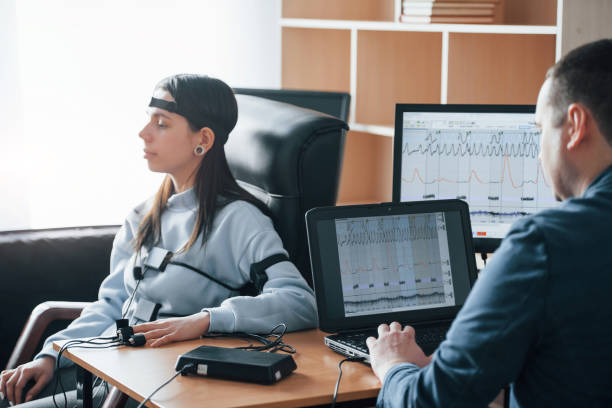

Polygraph exams, also called lie detector tests, have been used for decades in criminal investigations, employment screenings, and private disputes. Even though it’s common knowledge, many people don’t understand how these examinations work. A polygraph doesn’t actually tell if you’re lying. Instead, it captures physiological responses that could be linked to signs of stress and emotional shifts in the case of deception. A professional Lie Detector Test is typically conducted by trained examiners using specialized equipment to analyze these physiological reactions.
With the development of credibility assessment technologies, there has been broader discussion about accuracy, ethics, and scientific reliability. This article looks at the science behind polygraphs, their use, their limits and the future of deception detection.
What Is a Polygraph Examination?
A polygraph is an examination that records and measures multiple physiological indicators as the subject responds to a series of questions. They are usually signs such as:
- Heart rate
- Blood pressure
- Respiratory patterns
- Skin conductivity
- Perspiration levels
The rationale for the exam is that one may elicit measurable physiological responses to deceptive responses that differ from those elicited by truthful responses.
The polygraph instruments have come a long way since the old analog models to today’s all-digital, computer-driven instruments that can provide detailed data analysis and digital reporting.
History of Polygraph Technology
Early Scientific Foundations
Deception detection has its roots in the late 1800s, when researchers began investigating the link between emotional stress and physical responses. Researchers found that anxiety and mental stress could affect heart rate and respiration.
Development of Modern Polygraph Devices
In the early 1900s, several physiological measures were integrated into one recording device. Over the years, cops have increasingly used them for investigative purposes.
Expansion Into Civil and Private Sectors
Polygraph testing is not just used in criminal cases today. They are occasionally used by private investigators, lawyers, or corporations in cases of fraud, theft, and workplace misconduct.
How a Polygraph Examination Works
Pre-Test Interview
Typically, the process begins with the examiner asking the subject detailed questions. This is when the examiner describes what will happen, covers medical issues, and explains the questions they will ask.
This stage is significant because it provides a foundation for understanding and can help prevent confusion or misinterpretation during the examination stage.
Attachment of Sensors
The examiner places several sensors on the person’s body to record physiological activity. These may include:
- Pneumographs – tubes around the chest
- Blood pressure cuffs
- Finger Electrodermal Activity Sensors
- Utilize motion sensors, which provide an indication of physical activity.
Questioning Phase
Questions are normally broken down into categories:
Relevant Questions
These are directly related to the issue being investigated.
Control Questions
These are general questions to elicit comparison answers.
Neutral Questions
These questions are free of emotional content and help establish normal physiological patterns.
Data Analysis
The examiner then compares the physiological responses recorded during the examination with the results to determine whether there were significant reactions to specific questions.
Common Uses of Polygraph Examinations
Criminal Investigations
Polygraph exams can be used to obtain additional investigative information, identify inconsistencies, or reduce the number of suspects.
Security Screening
Some government offices may have screening tests for applicants for jobs that require national security or sensitive information.
Workplace Investigations
Credibility assessments are sometimes conducted during internal investigations by private companies into theft, fraud, or misconduct.
Personal and Civil Matters
Polygraph services are sometimes requested in family disputes, infidelity concerns, or civil litigation cases.
The phrase lie detector testing is commonly associated with these professional examinations, particularly in private investigative services.
Factors That Influence Accuracy
The accuracy is influenced by:
Emotional State
Physiological responses can be affected by stress, nervousness, fear, and anxiety, even when a person is telling the truth.
Examiner Skill
Substantial expertise and training are required to interpret results accurately, and the examiner’s experience and training are a significant factor.
Medical Conditions
Physiological measurements can be influenced by certain health conditions, medicines and psychological disorders.
Testing Environment
The reliability of recorded data may be affected by noise, distractions, discomfort or poor test conditions.
Limitations and Criticism
Scientific Debate
There is a debate among many scientists that physiological response does not necessarily correspond directly to deception. Anxiety can cause a person to react strongly, rather than dishonestly.
False Positives and False Negatives
Polygraph examinations can also misidentify honest individuals as deceptive and/or not detect deception in dishonest individuals.
Legal Restrictions
In many jurisdictions, polygraph results are not admissible without evidence of their reliability. They are subject to cautious evaluation in court due to ongoing debates over their scientific reliability.
Ethical Considerations
Privacy Concerns
Polygraph tests are not 100% accurate, and critics say they can be intrusive and potentially pressure a person to divulge personal information.
Informed Consent
Participants are fully informed of the process before starting the examination by ethical people.
The prospects of misuse are present. There is potential for misuse.
Unfair outcomes in court or employment contexts can result from improper examination procedures or inflated claims of accuracy.
Intermediate-to-advanced techniques are being developed to detect deception. Deception detection is an area of growing sophistication.
Computerized Polygraph Systems
Today, physiological reactions are more precisely measured using digital sensors and sophisticated software.
Artificial Intelligence Integration
AI technology is being studied to help examiners detect subtle physiological patterns.
Brain-Based Detection Research
Other methods of brain wave measurement and brain imaging are also being explored as alternatives to the traditional techniques.
How to prepare for a Polygraph Examination
Get enough sleep
Physiological responses may be impaired by fatigue, and stress levels may rise.
Be Honest in the Pre-Test Interview
Communication is key to preventing misunderstandings during questioning.
Steer clear of too much caffeine or alcohol.
The results of examinations may be affected by substances that alter nervous system activity or heart rate.
Understand the Purpose of the Examination
Understanding the process can reduce unnecessary anxiety and make it more cooperative.
Many people who need a Lie Detector Test are nervous because of misconceptions portrayed in films and television. Learning the steps to the process can help demystify the experience.
What the Future Holds for Polygraph Examinations.
Physiological monitoring, behavioral analysis, and artificial intelligence are likely to be combined in the future to detect deception. Although traditional polygraph exams are still largely employed, scientists are diligently seeking a more scientifically valid and restricted test.
While technological advancements may enhance the accuracy of tools for assessing credibility, ethical and legal issues will remain major considerations in discussions of such tools and techniques.
Conclusion
One of the most widely known methods of credibility analysis worldwide is the polygraph. The physiological measures taken during questioning are used to identify patterns associated with stress and potential deception. These examinations are extensively used in investigations and screening procedures, but there is debate about their scientific reliability.
The operation of polygraph systems, their limitations, and the factors that affect their results are of fundamental importance to those considering or studying this field. With technological development, methods of deception detection could become more sophisticated, but proper ethical oversight and scientific examination will still be required.