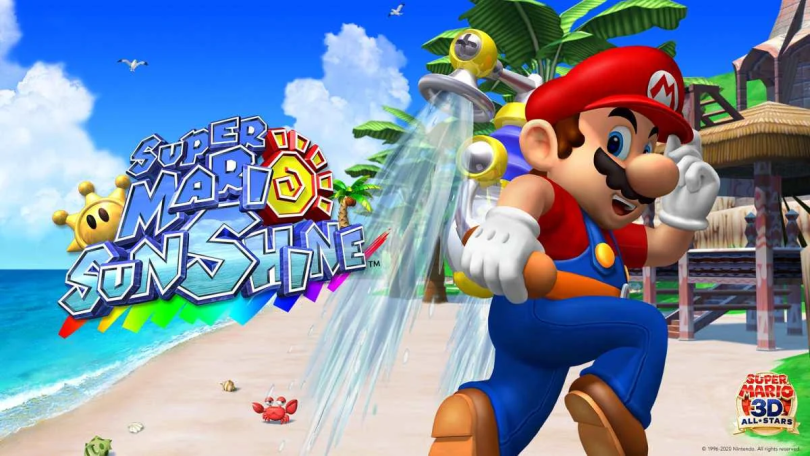

Super Mario Sunshine GameCube ROM is a keyword that continues to attract players interested in revisiting Nintendo’s colourful 3D platform adventure through a legally created backup. Originally designed for the Nintendo GameCube, Super Mario Sunshine moved Mario away from the familiar Mushroom Kingdom and placed him on the tropical Isle Delfino. Its bright setting, water-based mechanics, open-ended stages, and demanding movement challenges make it one of the most distinctive entries in the series.
A Vacation That Quickly Becomes an Adventure
Mario arrives on Isle Delfino with Princess Peach and Toadsworth, expecting a holiday. Instead, the island is covered in strange graffiti, and Mario is blamed for the damage. He is ordered to clean the island while searching for the real culprit. This simple setup gives the game a consistent purpose: restoring sunlight and beauty to each area by collecting Shine Sprites.
Unlike Mario games built around separate fantasy worlds, Super Mario Sunshine presents most locations as connected parts of one resort island. Beaches, harbours, villages, amusement parks, and hotels all share the same tropical identity. This creates a strong sense of place and makes Isle Delfino feel like a believable destination rather than a collection of unrelated levels.
FLUDD Changes Traditional Mario Movement
The central mechanic is FLUDD, a water-powered device worn on Mario’s back. Its standard nozzle cleans graffiti and attacks certain enemies, while additional nozzles change how Mario moves. The Hover Nozzle briefly keeps him in the air, the Rocket Nozzle launches him vertically, and the Turbo Nozzle provides a powerful burst of forward speed.
FLUDD makes movement more flexible without removing the importance of Mario’s core abilities. Players still rely on jumps, wall kicks, dives, spins, and precise landings, but water creates new options for correcting mistakes or reaching unusual areas. The most demanding secret stages remove FLUDD completely, testing whether players have mastered Mario’s basic movement rather than depending on the device.
Level Design and Exploration
Each main location contains several episodes that change objectives, characters, and parts of the environment. One visit may involve chasing Shadow Mario, another may focus on a boss, and another may require solving a platforming challenge. The shared map becomes familiar over time, but new tasks reveal routes and details that are easy to miss during an earlier episode.
Blue Coins add another layer of exploration. Some are visible, while others appear only after spraying certain objects, defeating enemies, or completing conditions in a specific episode. Their placement encourages careful observation, although collecting every coin can be difficult without organized notes. Players seeking full completion benefit from tracking discoveries area by area.
Understanding the GameCube Backup Format
A GameCube ROM or disc image represents data from an original optical disc. For responsible preservation, players should use backups created from games they own and follow local copyright rules. Keeping a verified personal copy can protect access when an aging disc becomes scratched or a compatible console is no longer readily available.
When a legal backup is used with a GameCube emulator, performance depends on the computer, graphics backend, controller setup, emulator build, and selected enhancements. Higher internal resolution can make the game look sharper, but increasing settings too aggressively may introduce slowdowns or visual problems. Starting with default settings and testing changes individually usually produces a more stable result.
Why the Game Still Stands Out
Super Mario Sunshine has a personality that differs from almost every other 3D Mario title. The tropical setting is unusually consistent, FLUDD adds mechanical depth, and the game often asks players to experiment with movement. It can also be challenging. Certain platforming stages, timed objectives, and late-game tasks require patience and careful control.
That difficulty is part of its lasting appeal. Successful movement feels earned, and the island becomes more enjoyable as players understand its shortcuts and hidden spaces. The lively music, expressive characters, reflective water, and warm visual style give the game an atmosphere that remains recognizable long after the original GameCube generation.
Conclusion
Super Mario Sunshine remains an important GameCube adventure because it combines familiar Mario movement with a completely new tool and setting. Isle Delfino feels connected, FLUDD supports creative exploration, and the secret stages provide pure platforming challenges. Whether players return for nostalgia, completion, or an interest in Nintendo’s design history, the game continues to offer a rewarding experience.
For more beginner-friendly information about GameCube titles, console backups, emulators, and classic gaming, romscombo provides focused guides written to make older platforms easier to understand.